

7 April 2026, by Billy Boss
How to Lead Yourself When Life Feels Like It's Falling Apart (3 Easy Steps)
There are moments when life does not gently build up to overwhelm. It hits you all at once.
One more message. One more responsibility. One more person needing something from you. One more decision you do not feel resourced to make. And suddenly, you can feel it in your body before you can even explain it in words. Your chest tightens. Your mind races. Your patience gets thin. You are still showing up for everyone, but inside, you feel like you are about to crack.
And then comes the part many women do in silence: the self-blame.
Why am I so reactive? Why can’t I cope like everyone else? What’s wrong with me?
If you have ever snapped when you did not want to, shut down mid-conversation, gone numb, or spiralled into harsh self-talk afterwards, this episode is for you. Because that moment is not a character flaw. It is often a nervous system response. And when you learn how to regulate in real time, you stop getting dragged by the moment and start leading yourself with calm, clarity, and integrity.
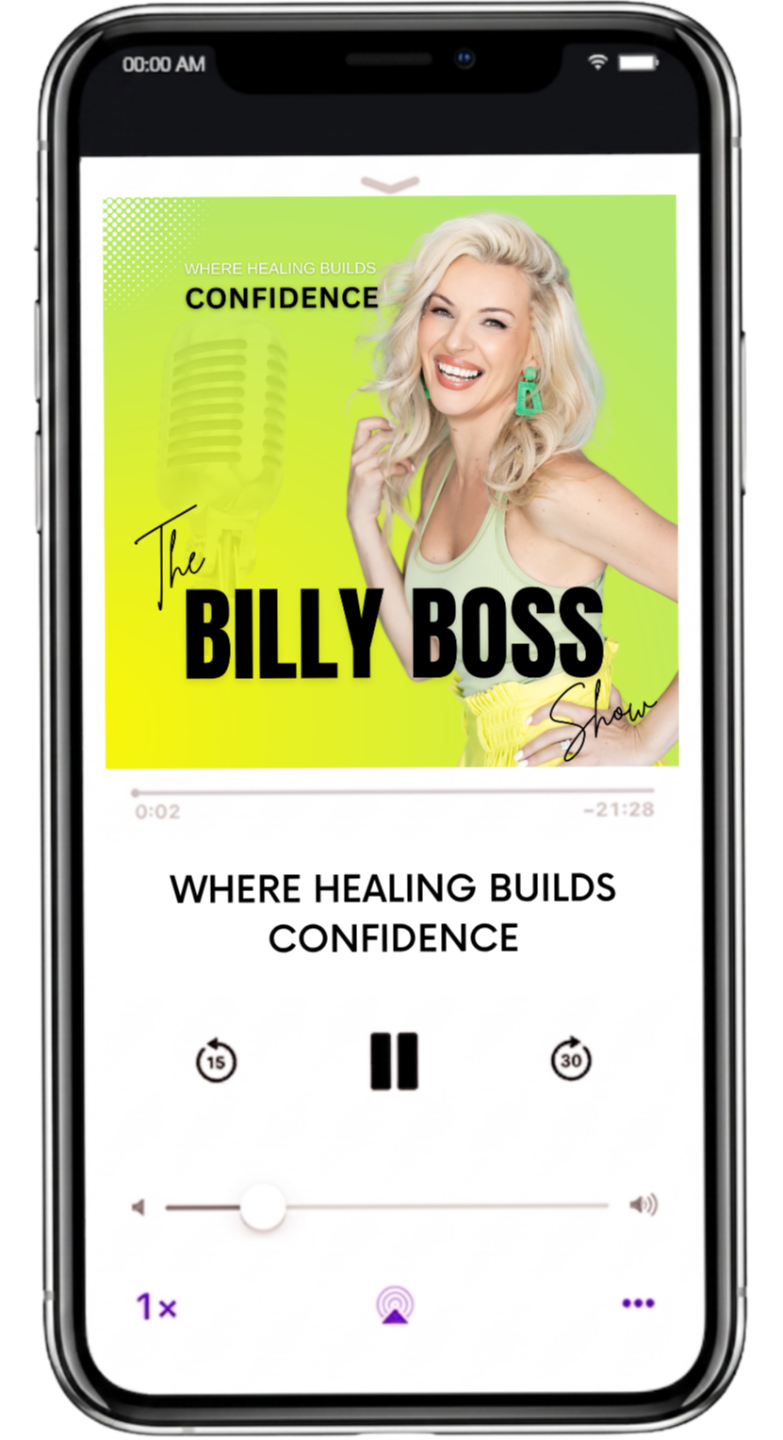
In Episode 86 of The Billy Boss Show, we explore a simple, repeatable emotional regulation process that supports nervous system regulation, self-worth and confidence, and the kind of grounded self-leadership you can actually use in the middle of real life.
This is not a “perfect mindset” episode. It is a practical, emotionally intelligent reset for women who are carrying a lot and still want to show up with self-respect.
When life feels like it’s falling apart, it’s often your nervous system, not your personality
Many women think overwhelm means they are weak, dramatic, too sensitive, or not coping.
But overwhelm is often a sign of nervous system dysregulation, especially when you have been holding too much for too long. Your body goes into protection, not because you are broken, but because it is trying to keep you safe.
In those moments, you may notice patterns like:
▪️ snapping, arguing, getting controlling, or feeling ragey
▪️ rushing, fixing, staying busy, overworking, or trying to escape the feeling
▪️ shutting down, procrastinating, going blank, feeling numb, or dissociating
▪️ people-pleasing, smoothing things over, over-apologising, or over-explaining
These are common stress responses. They can show up even if you do not identify with the word trauma. They are human nervous system patterns: fight, flight, freeze, and fawn.
Emotional regulation is a confidence skill, not a calm personality trait
A lot of women believe confidence means staying calm, staying composed, and never falling apart.
But real confidence for women is not performative. It is internal. It is the ability to come back to yourself when you are activated, overwhelmed, or emotionally flooded. It is the ability to choose your next step with integrity, even when your feelings are loud.
In this episode, you will learn what emotional regulation actually is:
Not never feeling overwhelmed.
Not forcing positivity.
Not pretending everything is fine.
Emotional regulation is noticing what is happening, then choosing a response you can respect later.
That “later” matters, because it is where self-trust lives.
When you respond in a way that aligns with your values, you strengthen self-worth and confidence. You prove to yourself, in real life, that you can stay on your own side. That you can reduce harm. That you can pause instead of erupt. That you can speak with steadiness instead of panic. That is self-leadership.
The 3 easy steps to lead yourself through overwhelm in real time
You do not need a 10-step routine when you are already overloaded. You need a simple tool that works in the car, in the kitchen, in the bathroom, at your desk, or mid-conversation.
In this episode, we break down a 3-step emotional regulation process you can practise in under a minute: Pause. Name. Choose.
The purpose is not to get rid of emotion. The purpose is to create space between the trigger and your reaction, so your adult self can come back online.
Step 1: Pause (slow the moment down)
Overwhelm speeds you up. It creates urgency. It pushes you into a reaction. The pause is a physical circuit-breaker. It tells your nervous system: I can slow down. I am here. I am safe enough to choose.
Here’s a simple way to pause using your body:
▪️ bring both feet to the floor
▪️ let your shoulders soften
▪️ take a slower exhale, longer than your inhale
This is nervous system regulation for real life. No perfect environment required.
Step 2: Name (give the experience language)
When you name what you feel, you create separation from it.
Instead of saying “I am overwhelmed”, you shift to something more spacious and true:
▪️ “This is stress.”
▪️ “This is fear.”
▪️ “This is anger.”
▪️ “This is overwhelm moving through me.”
This is emotional empowerment. Because when you can label the emotion, you are more likely to respond with clarity instead of impulsivity.
Naming helps you step out of shame and into self-awareness, which is a core foundation of emotional healing and personal growth for women.
Step 3: Choose (the next best step, not the perfect one)
When women are overwhelmed, the mind tends to demand a perfect answer right now. That pressure alone can intensify the spiral.
Your “choose” might look like:
▪️ taking 60 seconds before responding
▪️ asking for a pause in a conversation and returning when calmer
▪️ doing one task instead of ten
▪️ getting a drink of water and coming back
▪️ choosing clarity over rushing, especially at work
▪️ slowing the energy in the home with a simple reset
This is how you lead with confidence. Not by never being triggered, but by not letting the trigger drive the car.
Here’s a great question to ask yourself before you react:
What would a grounded version of me do next?
Why this tool works: language, body, and self-trust
Many women try to think their way out of overwhelm. They analyse. They replay. They over-explain internally. They try to be better.
But when you are dysregulated, your body is running the show. That is why a tool that involves your breath, your body, and your language creates real change.
And here is a powerful truth:
When you can pause, name, and choose, you interrupt the automatic pattern.
And when you interrupt the pattern, you create a new one.
That is how self-trust is rebuilt. That is how self-love for women becomes something you practise, not something you wait to feel. That is how emotional regulation becomes a skill you can access under pressure.
This is emotional leadership: you stay grounded enough to take your next right step, even when life is messy.
The 7-day practise that makes emotional regulation feel natural
The biggest mistake most women make is waiting for a major trigger to practise.
When a big moment hits, your nervous system will reach for what is familiar: snapping, shutting down, rushing, people-pleasing, spiralling.
That’s why the goal is to practise before you need it most. Practise this in small moments for the next 7 days:
▪️ when you feel slightly rushed
▪️ when you feel mildly irritated
▪️ when you feel pressure building
▪️ when you notice your shoulders tense or your thoughts speed up
One rep a day is enough.
This is how personal development becomes embodied. You train the pathway when it is small, so it is accessible when it is big.
And if you are a woman rebuilding confidence, healing old patterns, or learning how to stop abandoning yourself under stress, this practise is a powerful place to start.

If you feel like you are failing, read this slowly
Overwhelm does not mean you are failing. It means you are human, and you are carrying a lot.
If you have been judging yourself for your reactions, consider a kinder reframe: “My nervous system is overloaded. I need support, not shame.” Because shame never regulates you. It tightens everything. It speeds the spiral. And it convinces you that a hard moment is proof that you are not doing well, when really, it is simply a sign that something inside you is stretched beyond capacity.
You do not need a perfect life to regulate. You only need a pause.
And from that pause, you can name what is real and choose what is wise. You can take one grounded step, even if the day is still messy. Even if you are still tired. Even if you do not have all the answers yet. That is what emotional leadership looks like in real life.
If this episode meets you right where you are, tune in and let it support you back into steadiness, self-respect, and a calmer kind of confidence.
____
Ready for deeper support?
Release & Rise is an upcoming guided experience to help you release emotional weight, rebuild self-trust, and strengthen self-worth from the inside out. If you want the first updates when it opens, join the priority list here:
Join the Release & Rise Priority List
And if you’re in the thick of something right now and you’d love support that speaks directly to your situation, send your question through Ask Billy Anything. I read every submission, and I’d be honoured to answer yours in a future episode. Submit it here:
Ask Billy Anything
Follow me here:
Instagram
Facebook
Website
Sign up for my weekly dose of love newsletter for YOU at: billyboss.com
If you’ve ever felt so overwhelmed that you snapped, maybe shut down, or started spiralling, this episode is for you. I’m going to show you one simple regulation tool today that you can use in real time, so you can lead yourself with calm, even when life is a little bit messy.
Welcome back to Billy Boss Show the show which isn’t just about building confidence, it’s about the journey beneath it: the healing, the truth-telling, the unlearning, and the rising.
I’m Billy Boss, your host, and I know what it’s like to feel stuck, overwhelmed, and disconnected from yourself. From surviving childhood traumas, going through depression, anxiety, toxic relationships, and addictions, I rebuilt my life into one of health, happiness, and emotional freedom…and still evolving, and still transforming.
Now, my mission is to guide you to heal deeply, rise powerfully, and love yourself unconditionally from within.
Today, I’m going to share with you one thing, and that one thing only is: how to regulate when you are overwhelmed. It took me some time to get into the habit of regulating when my life was a little bit overwhelmed… when it got a little bit messy. And I can tell you that actually happens quite frequently.
So today the main focus is to walk away knowing how to regulate. This is not a big theory. This is not a 10-step process. This is not a huge framework. This is one tool you can use in the middle of real life, with kids around, with work pressure, relationship stress, or just one of those days where everything feels like it’s just too much and I can’t deal with this.
When I say “emotional leadership”, this is what I mean by it: The ability to stay grounded enough to choose your next right step, instead of being dragged by the moment. So, it’s the ability to stay calm, collected, and grounded, and move forward to your next right step.
By the end of this episode, you’ll have a simple process for how to regulate your thoughts and how to regulate your emotions.
Let me share a moment from my messy life that I think many women will find themselves in a very similar position, if not, exactly the same.
There was a season… or should I say many of those seasons… where I had a lot on my plate: many responsibilities, lots of expectations, and that internal pressure to keep it all together. And no doubt, many of us women, we find ourselves that we are the ones who keep everything together.
I remember one particular day where everything was happening at once, literally everything was happening at once. My mind was racing. My body felt really tight. My chest felt very heavy. And I was trying to be present. See, trying. I was trying to be present, trying to respond to people, trying to make good decisions, trying to show up as a present woman, as a present mum.
Instead, I felt like I was about to explode.
And what used to happen in moments like this, I would go one of three ways:
I would snap, which is flight. I would shut down, which is freeze. Or I would go into that spiral of, “What’s wrong with me? Why can’t I handle this?” I would really go into subconscious shaming.
Here’s the truth: in these moments, I was not a bad person. I was not weak. So if you think when you snap, shut down, or do your beat, you are not a bad person, and you’re not a weak person.
At the time, I didn’t really know what was going on with myself. But now I do know what was happening, and this is why I’m sharing this.
I was dysregulating. I did not know what regulation meant, what dysregulation meant. My nervous system was overloaded, and the only way to cope with the situation was to snap, shut down, or go into a spiral. That’s how I dealt at the time.
So if this is you, please do not shame yourself. Do not blame yourself. Do not guilt yourself. Moving forward, we are going to do things differently.
This is why I care so much about emotional regulation, because mums need it. Women in business need it. Single women, married women, leaders, carers…any woman who is carrying a lot. We need to master regulation. It’s going to benefit ourselves. It’s going to benefit us, our health.
And please tell me: what woman doesn’t have a lot on her plate?
Life doesn’t stop so you can calm down. Instead, what we need is a tool that works inside our life.
Let me make this very simple. First of all, let me tell you what emotional regulation is not, so that way we’ll come to the conclusion of what it is.
Emotional regulation is not about never feeling overwhelmed. It’s not about being calm at all times. In fact, I feel that’s very, very impossible. I can’t feel calm at all times. It’s not about being zen at all times.
Regulation is about being able to notice it.
Notice what’s going on.
Notice that you are not okay right now. And still be able to choose a response that you’ll respect later on.
What do I mean by a “response you’ll respect later on”? That’s the choice you make in that moment of activation that stays aligned with your values, that protects your dignity and the other person’s dignity. This is where we reduce harm rather than simply discharging emotions.
It’s a response you can look back on and say, “Wow, even though that wasn’t okay, I was still honest, responsible, and I led myself with dignity.”
This is where we prioritise integrity over impulse, and long-term trust over short-term relief.
Let this sink in: when we are overwhelmed, your body goes into protection mode. And that protection mode can look like fight, flight, freeze, or fawn.
Fight: snapping, arguing, controlling
Flight: being busy, rushing through things, fixing, escaping
Freeze: it’s shutting down, this is where procrastination comes as well, numbness comes in
Fawn: people-pleasing, agreeing to everything, smoothing things over
And you can be the most loving woman in the world, but if you are dysregulated, you won’t have access to your best self.
Hear me again: you can be the most loving woman in the world, but if you are dysregulated, if you’re all the time in fight, flight, freeze, or fawn, you won’t have access to your best self.
How do I know this so well? I’m sharing this from my own experience. You won’t have access to your best self if you’re continuously in fight, flight, freeze, or fawn,
So the goal is not to “be perfect.” Again, that’s something impossible.
The goal is: to come back and be grounded.
There is so much more coming in this episode that you don’t want to miss. But first, I want to share this with you: this episode isn’t just for you and me. It’s meant to be shared.
Now, if something in today’s conversation inspires you, don’t keep it to yourself. Don’t keep it a secret. Share with a friend, a loved one, or someone who needs to hear this message today. Post it, tag me, and let’s spread the love together because you never know whose life you might change with just one share.
And now, more of this incredible conversation together.
So how do we achieve that “emotional leadership”? Let’s talk about that one tool.
If you don’t remember the three steps to this tool, this is the main thing from today:
Step 1: Pause
We might underestimate the power of pause, but when you’re overwhelmed, the most powerful thing you can do is just pause, even for a few seconds. Because overwhelm speeds you up. It rushes you through things. It makes you react.
So here’s your pause:
Put both feet on the floor, if you can, and be conscious of it. Yes, my feet are right now on the floor but I’m not thinking that they’re down the floor, but when I’m intentionally about it, “Oh yes, I’m now having my both feet on the floor.” So be conscious about making that decision. And drop your shoulders slightly.
Because when we are going through reaction, overwhelm, when we are rushing through life, our body is tensed. So now, when we have both feet on the floor, we are more conscious about it. We drop our shoulders slightly, we are more relaxed now. Then we can breathe out slowly, as if you are fogging up a mirror.
If you spend some time in front of a mirror, like myself, you’ll exactly know what I’m talking about. I know you might be thinking, “Oh this is too much to remember.” But if you start practicing both feet on the ground, be conscious about it, shoulders relaxed, dropping them down slightly, breathe out slowly, that’s the message to your nervous system: “I’m not in danger. I can slow down.”
And I want you to remember this line: You don’t need a perfect life to regulate. You only need to pause.
And just by pausing, everything else will come naturally. Shoulders relaxed, breathe out, and that’s your reassurance that you are safe, you are not in danger.
So step 1 is to Pause, and that is the main thing in this process. Just Pause.
Step 2: Name What’s Going On
Name what’s happening, in a very simple language. You can say to yourself:
“This is stress.”
“This is anger.”
“This is fear.”
Just naming what’s happening. Naming matters because it separates you from it.
Usually, we like to take ourselves and blame ourselves, however, when we name what’s going on, we are making separation: “Yes, this overwhelm, this is stress, this is anger, this is fear.”
You’re not saying, “I am overwhelmed.” You are saying, “This is overwhelm, and it’s moving through me.”
People ask me, “Billy, how do I get rid of these emotions?” We can’t get rid of emotions, and we don’t want to get rid of emotions. And there are no good or bad emotions. Emotions are there to guide us. They’re speaking to us. It's just really knowing what’s happening, it’s figuring it out.
That small shift brings you back into your adult self, the part of you that can choose. Why do I say your adult self? If you haven’t listened to my previous podcast, we are talking about you being in control of yourself. Most reactions and triggers they are coming from your inner child. So if you haven’t listened to our previous podcasts, all about our inner child, the types of traumas, and everything that comes with inner child, make sure you go back and really gain deeper understanding. And that small shioft will bring you to your adult self, the part of you that can choose.
Step 3: Choose
Now you choose the next best step, not the perfect step, just the next best step.
In a hard moment, your “choose” might be:
“I’m going to take 60 seconds before I respond.”
“I need a glass of water and I’ll come back to it.”
“I’m not in a state to talk about this right now. Let’s pause and revisit it later.”
“I’m going to do one thing and one thing only at this moment, not 10 things.”
If you’re a mum, your “choose” might sound like:
“Mummy needs one moment.”
“Everybody breathe with me.”
“We are going to slow down.”
If you’re in business or work, your “choose” might be:
“I’m going to respond to that email later, or at a designated time.” I know some people they’re actually blocking some time where they just dealing with emails.
“I’m going to ask for clarity rather than rushing.”
“I’m going to set one priority for the next hour.”
If you’re in a relationship, your “choose” might sound like:
“I want to really talk about this, but I’m flooded right now. Please give me a few minutes, and I’ll come back to you.”
This is the leadership. You’re leading yourself as a mum, as a woman in business, a s a woman at work, in a relationship, in life. You are leading yourself. Not because you never feel overwhelmed, but because you don’t let overwhelm drive you.
You are the driver of the car. You’re not in the passenger seat.
So now we’ve got these three steps: Pause, Name, and Choose.
Now you might be asking, “How do I practise this on a daily basis?”
Don’t wait for the biggest trigger, because most likely we’ll go back into what’s familiar to us: fight, flight, freeze, fawn, whatever it is. We’re going to practise this on the small moments, and this is when you feel slightly rushed, slightly irritated, slightly pressured. The you can always remind yourself: pause, name, choose.
One rep a day is enough.
If you make these conscious choice for the next 7 days to practise pause, name, and choose, every time you feel a little bit rushed, a little bit irritated, or under pressure, you will get into the pattern. It will become familiar to you.
And if you want a simple question to guide the “choose” step, use this:
What would a grounded version of me do next?
It’s not a perfect version, it’s only a grounded version.
Maybe that grounded version goes for a little walk. Maybe that grounded version will journal couple of things. So what would that grounded version of you do next? And remember that grounded version gives a response you can look back on and say to yourself: “Even though I was not okay, even though I was under pressure, under stress, I was still honest, responsible, and self-led.”
And this is where you show to yourself that integrity and long-term self-trust over short-term relief.
Overwhelm does not mean you’re failing. It simply means you’re human, a real human with feelings, and you’re carrying a lot.
And emotional leadership is the skill of coming back to yourself in the middle of real life.
And your tool is very simple: Pause. Name. Choose.
Try this once a day for the next 7 days, even in the small moments, and you will notice how differently you feel.
And if you want deeper support as you let go of this emotional weight and rebuild self-trust, there is an upcoming guided experience called Release and Rise. If you would like to be the first to know when it’s ready, join our priority list via the link in the show notes.
My friend, thank you for being here today with me. Thank you for taking time away from your busy schedules. Life is a little bit hectic. Life is a little bit messy.
That’s why it’s very handy to know that we need to pause, name it, and choose, to regulate our nervous system so we can become our better self.
With so much love to you, stay well and stay safe.
And if no one told you today, let me have that pleasure: you are enough, and you are deserving of the best.
I’ll see you next time.
I would love to hear your thoughts. Tag me on social media when you share this episode and let me know what resonated with you.
When we share this message, we help create a ripple effect of positive change.
Emotional Boundaries: Stop Carrying Everyone Else’s Feelings
Coming Soon